


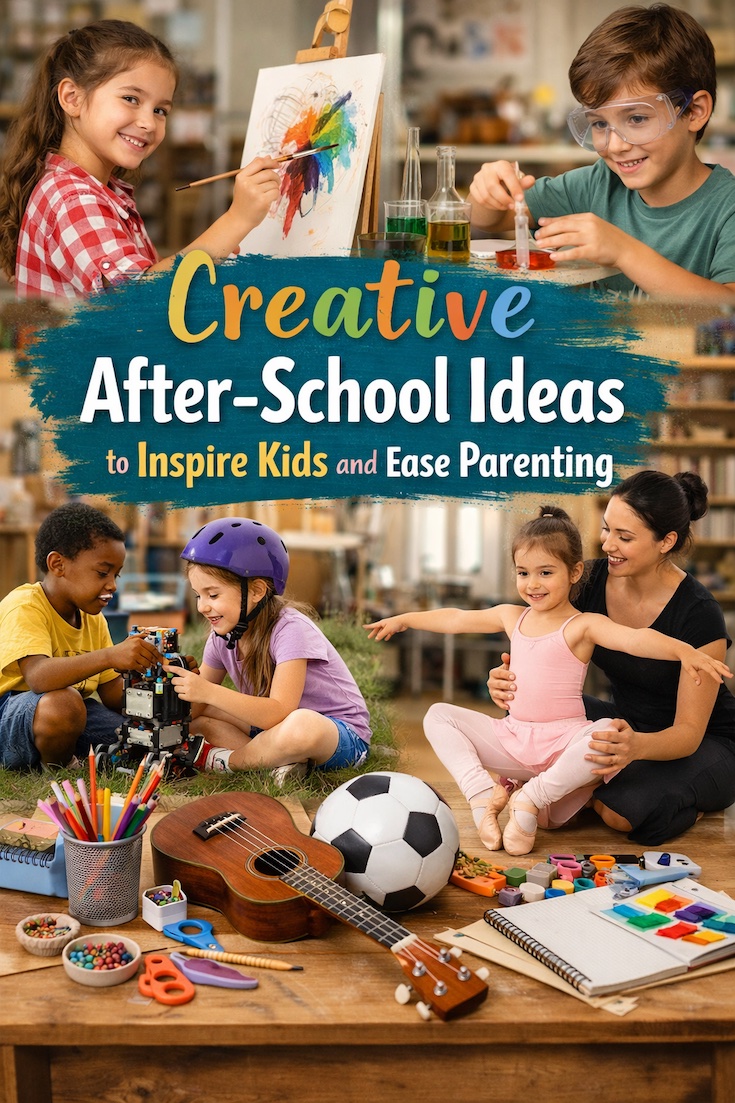
Authored by Sara Bailey, our long-standing collaborator.
For parents in El Paso balancing parenting and career, the hours between the final bell and dinner can feel like the most stressful part of the day. After-school activities for children are supposed to support kids’ energy, confidence, and children’s developmental needs, yet the usual choices can feel too limited, too pricey, or simply a poor fit for a child’s personality. When pickup times clash with work, waitlists stretch on, and one-size-fits-all programs leave kids bored or overwhelmed, it’s easy to feel stuck. There are creative extracurricular options in El Paso that can meet real-life schedules and real kids.
Quick Takeaways for Busy Parents
- Explore alternative after-school activities that spark creativity and reduce daily parenting pressure.
- Try crafts for kids to build focus, confidence, and hands-on problem-solving at home.
- Consider arts education to nurture self-expression and steady skill growth beyond school.
- Look into STEM programs for children to encourage curiosity, experimentation, and real-world thinking.
- Introduce entrepreneurship for youth to support initiative, responsibility, and practical life skills.
Why Creative After-School Time Works
Out-of-the-box learning means kids practice skills in a fresh setting, not just repeat schoolwork. When they try music, art, coding, or performance, their brains make new pathways, and those new neural connections support stronger thinking, memory, and problem-solving.
This matters because confidence grows from doing, not just being told. A child who feels capable and connected tends to argue less, recover more quickly from frustration, and show greater curiosity. That shift can bring calmer evenings and fewer battles over homework or screens.
Picture a shy kid helping paint a set or rehearse a short skit with friends. They learn turn-taking, listening, and how to try again after mistakes, which builds learning and memory without feeling like another lesson.
Build a Weekly Mix: Crafts, Arts, STEM, Service, and a 15-Minute Digital Art Night
When afternoons feel long (and your energy feels short), a simple weekly “mix” can keep kids curious, capable, and connected, without you having to reinvent the wheel every day.
- Start a low-mess craft “rotation bin”: Pick one theme for the week, nature, space, pets, or celebrations, and load a shoebox with 5–7 basics: paper, tape, glue stick, scissors, markers, and one “special” item like yarn or foil. Set a 20–30 minute timer and give one prompt: “Make something that solves a problem” or “Build a gift for someone.” This works because kids get a predictable routine while still having room for choice, which builds confidence.
- Create a tiny performing-arts slot (no stage required): Choose one day for “two-song Tuesday” or “mini-movie Friday” where kids rehearse a short skit, dance, or joke routine and perform it after dinner. Keep it friendly by assigning roles: one kid performs, one does “lights” (a lamp), and one is the announcer. Performing arts opportunities help kids practice communication and emotional expression, skills that often translate into calmer behavior later.
- Try a 10-minute instrument habit using household cues: If you have an instrument, tie practice to something that already happens (right after snack, before screen time, or while you start dinner). Use a simple three-part structure: 2 minutes warm-up, 6 minutes “today’s challenge,” 2 minutes “play something fun.” If you don’t have an instrument, use rhythm: clapping patterns, a bucket drum, or a homemade shaker. Music still strengthens focus and self-control.
- Do kid-led STEM with one question and two materials: Put out two materials, like tape and straws, or cardboard and rubber bands, and ask one question: “How can you make this hold more weight?” or “How can you make it move?” Then step back; allowing children to take the lead keeps them more engaged, especially when school has felt demanding. Take a quick photo of attempts so kids can see progress (and you can celebrate effort, not perfection).
- Make service a monthly family “micro-volunteer” habit: Choose one small act that fits your time: write thank-you notes for school staff, make birthday cards for a community organization, or do a 15-minute neighborhood litter walk with gloves and a bag. Give kids ownership by letting them pick the recipient and message. Volunteering for kids builds perspective and belonging, two things that really support well-being.
- Run a small-business experiment for one weekend per month: Keep it educational and low-pressure: have your child choose one item or service, pet portrait drawings, bookmark bundles, a lemonade stand, or mowing a neighbor’s yard. Help them do three steps on paper: set a goal ($10 for a book), list costs, and write a 2-sentence “pitch.” Even if they never sell a thing, they practice planning, math, and courage.
- End one weeknight with a 15-minute digital art night: Use any basic drawing/paint program already on your device and offer two prompts: “Draw a place you wish existed” and “Make a poster for a made-up event.” Encourage kids to experiment with brush styles for five minutes, then add shapes and color for five, then title and “artist statement” for five, or explore an AI art generator as another way to create. Share the final image by texting it to a grandparent or printing it for the fridge; small audiences make creative work feel meaningful.
A steady mix like this makes it easier to choose activities that match your real week, time, budget, energy, and the skills you want your child to build after school in El Paso.
After-School Options Compared at a Glance
Parents in El Paso do not just need “fun ideas.” You need choices that match your budget, time, and bandwidth while still helping kids grow. This quick framework compares a few high-impact options so you can pick what fits your real week, not an ideal one, and remember that quality matters as much as participation, since many kids join out-of-school-time programs but not all experiences feel equally supportive.
| Option | Benefit | Best For | Consideration |
| Rotation bin crafts | Creativity and independence with a predictable setup | Low-energy weekdays, ages 4 to 12 | Requires a small supply stash and boundaries |
| Two-song performance night | Communication, confidence, and family connection | Kids who seek attention or storytelling | Can feel vulnerable without a kind audience |
| 10-minute music habit | Focus and follow-through in tiny doses | Tight schedules, skill-building routines | Needs a consistent cue and simple expectations |
| Kid-led STEM challenge | Problem-solving and persistence through trial | Curious builders and hands-on learners | Adults must tolerate mess and “failed” attempts |
| Micro-volunteering | Empathy and belonging with simple actions | Families wanting meaning, not just busy | Works best when the kid picks the recipient |
If you are short on time, the music habit and performance night often fit in without extra setup. If you are craving calmer afternoons, crafts, and STEM give kids a concrete “next thing” to do. Choose one option that feels doable this week, and you will be surprised how quickly confidence follows.
Start Small to Spark Creativity After School in El Paso
When afternoons feel like a tight squeeze between work, dinner, and homework, even “one more thing” can sound impossible. The hopeful parenting approach here is simple: match an option to real-life limits, then treat it as a short, low-pressure experiment with steady parental support for learning. Over time, those small choices encourage creativity in children and build skills that lead to positive child development outcomes, including confidence, focus, and healthier ways to handle frustration. Small steps after school can grow big confidence over time. Pick one activity from the chart and try it for two weeks, then celebrate one small win and adjust as needed. Those tiny moments add up to enriching children’s lives and strengthening connections at home.