


Authored by Sara Bailey, our long-standing collaborator.
Busy parents juggling work and caregiving, mid-career professionals carrying constant deadlines, and students balancing pressure with uncertainty often share the same quiet weight: stress that looks “manageable” from the outside but feels heavy on the inside. Everyday mental wellness can slip to the bottom of the list when life is packed, leaving emotional self-care to happen only after things get bad. Introductory mental health awareness starts with noticing those small frays in patience, sleep, and focus before they become a breaking point. There are creative mental health strategies that meet real life as it is, offering steady support in ordinary moments.
Understanding an Expanded Mental Wellness Toolkit
Unconventional mental health practices and alternative wellness activities widen your choices beyond the standard self-care menu. Think of them as an “and,” not an “instead,” adding novel ways to feel supported when journaling or working out is not your thing. Even small, structured options like the introductory mental health toolkit can help you experiment without requiring a huge time or energy commitment.
This matters because your needs change across seasons of life. A new parent, a burned-out professional, and a stressed student may need different kinds of relief in different weeks. Since one in four people will be affected by mental health issues, having more than one path to steadiness is practical, not indulgent.
Picture your wellbeing like a playlist, not a single song. Some days you need calm and quiet, and other days you need movement, laughter, or creative focus. When you give yourself permission to try a few “unexpected” supports, you are more likely to find what actually sticks.
Try 4 Low-Pressure Ways to Ease Stress This Week
Once you start thinking of mental wellness as a toolkit, it gets easier to try small supports without needing them to “work” perfectly. This week, you might sample four gentle, alternative modalities: 1) a brief mindfulness practice to help your attention soften and settle; 2) breathwork to cue your nervous system toward calm; 3) ashwagandha as an herbal option some people explore for stress support; and 4) THCa, if you’re curious, this one earns a look for a straightforward starting point.
Choose 9 Outside-the-Box Habits That Quiet the Mind
When the usual “take a deep breath” advice isn’t landing, I like having a small menu of options, tiny experiments you can try without committing to a whole new lifestyle. These build nicely on low-pressure stress-easers (like brief mindfulness, gentle movement, and sensory resets) by giving your mind something simple and absorbing to do.
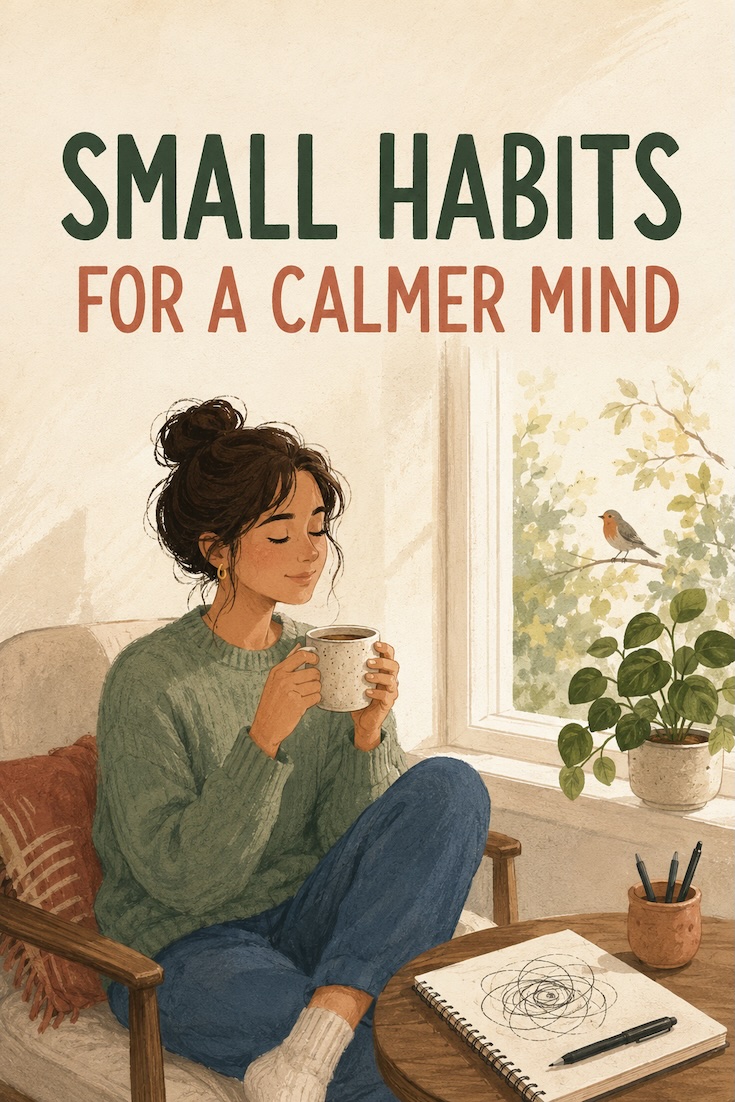
- Try a 10-minute birdwatching “micro-sit”: Step outside or sit by a window and look for three birds, any birds, and note one detail about each (color, flight pattern, sound). The birdwatching benefits are quietly powerful: your attention shifts outward, your breathing naturally steadies, and your brain gets a break from looping thoughts. If you can, end by writing one sentence: “Today I saw…” to make it feel real and complete.
- Do an “ugly art” page (art therapy activity): Set a timer for 7 minutes and fill a page with messy color, scribbles, shapes, or collage scraps, no skill required. Art therapy activities work because they move feelings into your hands; you’re processing without having to explain everything in words. When the timer ends, circle one area that matches your mood and give it a simple label, such as “tired,” “wired,” or “hopeful.”
- Practice a two-move tai chi loop (tai chi for mental health): For 3–5 minutes, repeat a slow “raise hands up, lower hands down” motion while shifting your weight side-to-side. Tai chi for mental health supports calm by pairing attention with steady movement, like mindfulness that has something gentle to “hold onto.” If you feel self-conscious, do it in your kitchen while the kettle heats.
- Take a “senses walk” with a single mission: Walk for 8–12 minutes and collect five textures (visually), four sounds, three colors, two smells, and one thing you’re grateful you noticed. This builds on the low-pressure grounding techniques you may have tried earlier, but adds structure so your mind has less room to spiral. If you can’t go outside, do the same scan in one room.
- Volunteer in a “small and specific” way (volunteering and wellbeing): Choose a task you can complete in under an hour, write two cards to isolated seniors, pick up litter on one block, or help at a one-time community event. Volunteering and wellbeing often go together because purposeful action interrupts rumination and reminds you you’re connected to something larger. Keep it bite-sized so it feels nourishing, not draining.
- Do a “worry-to-plan” index card: Write one worry at the top, then split the card into two columns: “What I can do in 10 minutes” and “What can wait.” This is one of my favorite unique mental wellness exercises because it respects your worry without letting it run the day. Do the one 10-minute step immediately (send a message, gather paperwork, jot questions), then put the card away.
- Create a 3-item “comfort rotation” (creative self-care idea): Pick three comforts that take under 5 minutes, warm drink, hand lotion, a short stretch, a shower playlist, stepping into sunlight, and rotate them when you feel yourself revving up. The rotation matters: it prevents comfort from turning into avoidance and keeps your nervous system guessing in a good way. Aim for “small relief,” not “perfect calm.”
- Try a “constraint challenge” to quiet the mind: Choose one tiny constraint for a routine task, make a simple meal with only five ingredients, tidy one drawer, or write a paragraph using only short sentences. Constraints reduce overwhelm by narrowing the decision field, where stress often hides. When you finish, pause for 20 seconds and notice that your mind usually gets quieter.
- End the day with a 90-second “mental closeout”: Set a timer and write three lines: one thing you handled, one thing you’re carrying, one thing you’re releasing until tomorrow. This pairs beautifully with earlier low-pressure relaxation because it gives your brain a clear “done for now” signal. If writing feels like too much, say the three lines out loud while brushing your teeth.
Common Questions About Trying New Mental Wellness Habits
Q: What if I barely have time, and I know I will quit?
A: Choose the smallest version that counts, like two minutes at a window, one scribble page, or one sentence at bedtime. Tie it to something you already do, such as coffee, brushing teeth, or waiting for a download. Consistency comes from making it easy to start, not from pushing harder.
Q: How can I do this without spending money on classes or supplies?
A: Use what you already have: a pen, recycled paper, your living room floor, and whatever view is available. If you want structure, many libraries and community centers offer free or low-cost groups. The goal is a steady cue for your brain, not a perfect setup.
Q: Why do these “weird little” habits help when I feel stuck?
A: Because your mind is not failing; it is overloaded. It can be comforting to remember one in eight people lives with a mental disorder, so you are not alone in needing real tools. Simple tasks give your attention somewhere gentle to rest.
Q: Can I try these if I feel awkward doing them around other people?
A: Yes. Pick private versions first, like slow movements in the kitchen or a quiet observation exercise at a window. If you want company later, invite one trusted person and keep it short.
Building Long-Term Mental Wellness Through One Small Habit Shift
It’s hard to care for your mind when life is busy, money is tight, or new practices feel awkward or uncertain. The steadier path is a mindset of reflective self-care, choosing small experiments, staying curious, and letting empowerment in mental health come from what genuinely supports a supportive mental health journey. Over time, that openness makes room to embrace wellness innovation without losing your grounding, and long-term emotional well-being starts to feel less like a fragile goal and more like something you can return to. Small, kind experiments are how lasting mental wellness is built.